-
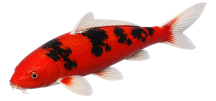
Aka Bekko
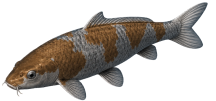
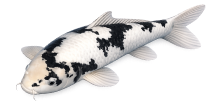
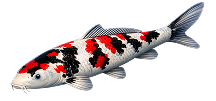
Bekko are a distinct group of koi that trace their origins to the Sanke bloodline. There are three recognized varieties: Shiro Bekko, which has a white base; Aka Bekko, which has a red base; and Ki Bekko, which has a yellow base. All Bekko are characterized by bold black markings, known as sumi, that appear in a stepping-stone pattern along the back. Ideally, these markings should be deep, rich black and stand out clearly against the fish’s white, red, or yellow background.
-
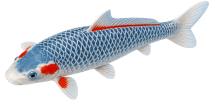
Asagi
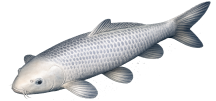
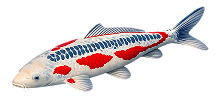
Asagi are among the oldest and most historically important koi varieties, serving as the foundation for many modern bloodlines. They are admired for their refined and traditional beauty, featuring a blue to blue-gray reticulated pattern across the back created by dark-edged scales. Vibrant red-orange coloration is typically found along the lower body, including the abdomen, gill plates, and pectoral fins. As these koi mature, it is common for the red coloration to gradually extend upward along the sides, while dark markings may develop on the head, adding character and individuality to the fish.
-
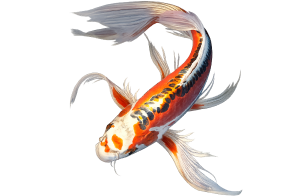
Butterfly Koi
Butterfly Koi are a variety of Koi known for their long, graceful fins that trail behind them as they swim. These extended fins create an appearance similar to butterfly wings, which is how they earned their name. While they share many characteristics with traditional koi, some breeders and hobbyists do not consider butterfly koi to be true koi because they were developed through hybridization.
Traditional koi originated in Japan during the 1800s, whereas butterfly koi have only been around for a few decades. Although koi are sometimes mistaken for goldfish, they are actually different species. Both fish descended from wild carp and are closely related, but goldfish were first selectively bred in China, while koi were developed in Japan. -
Chagoi
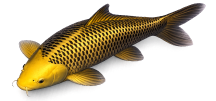
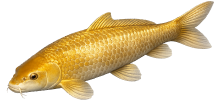
Many hobbyists assume that identifying a top-quality Chagoi is simple because of its single-color appearance. In reality, exceptionalChagoi are just as challenging to find as any other premium koi variety. Judges and breeders look for a powerful, well-balanced body shape, precise scale placement, and strong fukurin that enhances the fish's overall presence. The color should be rich, consistent, and free of imperfections, while the scales should display excellent definition and clarity. The finest Chagoi also possess the genetics and frame needed to reach impressive jumbo sizes exceeding 35 inches, making truly outstanding specimens relatively rare.
-
Goromo
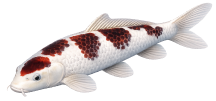
The Goromo family is known for its refined and understated beauty, making it especially popular among experienced koi enthusiasts. Although considered a relatively modern variety, Goromo first emerged in Japan during the mid-20th century through selective breeding efforts. The variety originated from crossing Kohaku and Narumi Asagi bloodlines, combining the bold red patterns of Kohaku with the distinctive reticulated influence of Asagi.
Today, the term "Goromo" refers to a group of related varieties that share these characteristics. Among them, Ai Goromo is the most widely recognized, prized for the delicate blue edging that overlays its red markings and creates a unique, elegant appearance. -
Goshiki
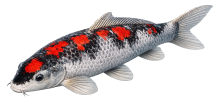
The exact origins of Goshiki remain a topic of discussion among koi enthusiasts, though many believe the variety was developed through the blending of Asagi and Sanke bloodlines. Known for their striking appearance and unique coloration, Goshiki have become one of the most admired varieties in the koi hobby. While they were once grouped within the Kawarimono classification, continued refinement by breeders has elevated their status, and they are now recognized as a distinct variety at major koi exhibitions.
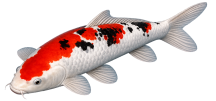
Goshiki typically display red patterns reminiscent of those seen on Kohaku, set against a darker reticulated background. Unlike Kohaku, however, the emphasis is often placed on the overall harmony between the red markings and the underlying scale pattern. In some specimens, the influence of their Asagi heritage can be seen through a net-like effect that extends into portions of the red pattern.